
Thinking Warm Thoughts About the World's Most Perfect Song
A tribute to "Summertime," one of the greatest, and most rewarding, songs of the 20th century

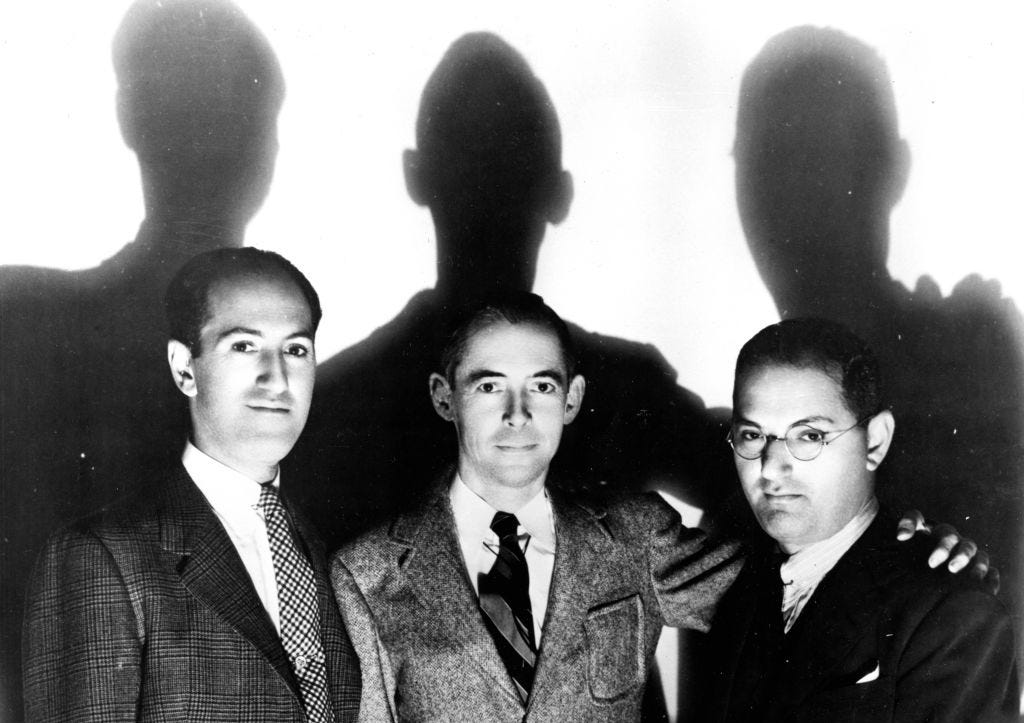
(The following is a revision of a post I wrote in July 2016.)
Over the last couple days, we’ve received somewhere around 7 inches of snow here in the Lehigh Valley. We got 5 inches yesterday and that was supposed to be it — at least, that’s what I thought as I shoveled the stuff off my front walk. And then I woke up this morning and it was snowing again.
Not what I wanted to see (or shovel).
To add icy insult to injury, the low Monday night and Tuesday morning is supposed to be a sparkling 9 degrees Fahrenheit. (That’s above zero, fortunately.)
It’s enough to make a person cast his mind back to the warm temperatures and warm emotions of summertime — and, by extension, “Summertime,” the classic song from “Porgy and Bess.”
I don’t think there’s a more perfect, or indestructible, song. It’s been recorded thousands of times, by thousands of different performers, and I don’t know if anyone has ever screwed it up. Oh, the performances might be boring or overwrought, but that’s not the song’s fault. It’s always, at the least, listenable — and at best, transcendent.
“Summertime” is a model of simplicity and delicacy. Its lyrics (by DuBose Heyward and Ira Gershwin) and music (by George Gershwin) convey so much with so little: one- and two-syllable words and, in some arrangements, just four chords.
Summertime,
And the livin’ is easy
Fish are jumpin’
And the cotton is high
And yet its yearning is unmistakable, whether it’s from the descending pattern after “high” or the heartbreakingly hopeful third verse, with its quiet declaration of a better future. It’s a blues song entwined with a spiritual. (Its roots are in the classic “Sometimes I Feel Like a Motherless Child.”)
One of these mornings
You’re going to rise up singing
Then you’ll spread your wings
And you’ll take to the sky
No less an authority than Stephen Sondheim rated Heyward’s lyrics as some of the finest “in the history of the American musical theater.”
“There are two reasons for this, and they are connected. First, he was primarily a poet and novelist, and his only song lyrics were those that he wrote for ‘Porgy.’ Second, some of them were written in collaboration with Ira Gershwin, a full-time lyricist, whose reputation in the musical theater was firmly established before the opera was written,” he wrote. “But most of the lyrics in ‘Porgy’ — and all of the distinguished ones — are by Heyward. I admire his theater songs for their deeply felt poetic style and their insight into character. It's a pity he didn't write any others. His work is sung, but he is unsung.”
I own several versions of “Summertime,” but I’m a piker at best. There are more than 67,000 available, according to The Summertime Connection, a (possibly defunct) site that collected them. At the least, the Guinness Book of World Records says it’s the most covered track in existence.
For my money, the best version is the one from Ella Fitzgerald and Louis Armstrong. It moves me every time, from the yearning vocals to Armstrong’s typically emotive horn playing. Special tribute to Russell Garcia, who did the arrangement:
Then there’s Al Green’s glorious rendition. Green, of course, elevates everything he does:
Then tack over to Billy Stewart, whose wild 1966 version I didn’t even recognize as “Summertime” until years after I first heard it:
Sidney Bechet, with Teddy Bunn on guitar, offers a mournful take:
And finally, there’s Miles Davis, whose version embodies cool.
Which brings us back around to the snow piling up outside my window. At least I don’t have to wait to take to the sky.
Post your favorite in the comments.