
The One in 909
In which I ride in an ambulance on Thanksgiving Day, watch the Beatles, and learn to use a spirometer; My cancer memoir, "Acknowledgments," continued

For new readers: More than a year ago, at the beginning of 2025, I told myself that I would finally write my cancer memoir. I had saved my posts and notes from the 15 months I went through treatment, and I was going to put it together into a book, even if only to prove that I could.
As a way of pushing myself, I’m posting chapters on Substack. The goal is to have a complete memoir, eventually. Each chapter will begin with one or more posts I made during treatment, followed by commentary. You can find earlier chapters at blockheadchronicles.substack.com, though you may have to hunt a bit, because I’ve gotten lazy about continuing the cancer story, instead writing about music, movies, baseball, and politics. You know: things that matter.
(Also: Cats.)
As with any project of this type, the writing is loosely edited and baggier than I’d like (and I’m someone who writes lots of baggy parenthetical interruptions, like this one). In fact, consider it a … second draft. Or a 1-1/2th draft. Something to keep in mind if you’re expecting a polished reading experience. This is more like a crusty lump of coal.
III. Pneumonia
Update, 11/25 p.m. (Facebook, November 25, 2021 [Thanksgiving Day]):
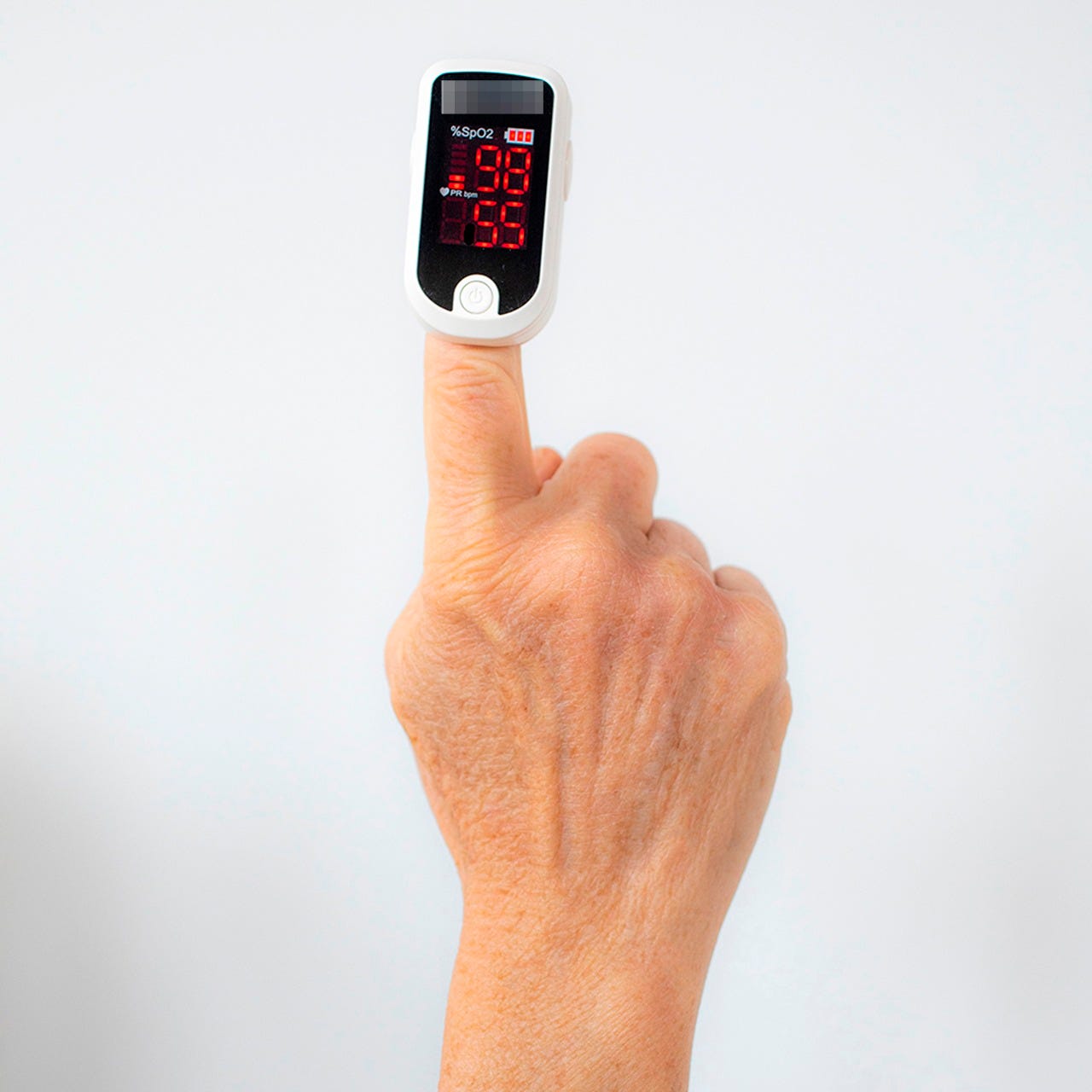
Back in hospital. Rough night with mediocre PulseOx, so we decided it was best to leave monitoring to the pros. My first ambulance ride as a patient. My first time being carried downstairs in a wheelchair, for that matter.
Life is full of surprises.
They’re not sure what’s going on with my lungs. The pulmonary doctor hypothesizes I may have some kind of what’s called eosinophilic pneumonia, or possibly radiation-related pneumonia. I’ll be getting a tube into my lungs for samples tomorrow. If the doc is correct, treatment is steroids.
Most blood numbers are decent. I have a very slight fever. So really the main thing is the lungs. Take good care of yours.
S— and I really debated calling 911, bringing over a whole crew of police and paramedics at 3:45 a.m., for “respiratory difficulty.” I don’t know if I’ve ever called 911 in my life. But it was absolutely the right decision. I’m thankful to be here, physically and existentially.
Time suddenly becomes very short when you’re faced with these situations.
So, to you and yours: Love each other and be grateful for the good things — and even the not-so-good things — in our lives. Trust me.
ETA: For Beatles fans out there, I’m in Room 909. And I’ll be watching (on my phone) tonight.
-
Update, 11/27 a.m.:
I’ll keep this one short and, for me, circumspect.
Had the lung biopsy (via brochoscopy, who I think was a player for the Decatur Staleys) yesterday afternoon. It went well, finally, though the report said they had to stop more than once because I was coughing furiously. I was under sedation and that had to be increased during the procedure. These are not things you like to read, but they did get the samples they needed.
It was late afternoon by the time I was wheeled back in the room. I was hungry — close to 24 hours since I’d eaten — and groggy. Almost literally upon finishing an omelet dinner, I was overtaken by chills and shivers like I’d never felt. “Shiver” isn’t the right word; in my legs it was closer to the inadvertent movement of a seizure. Terrifying. Took many minutes to get me eased and the shivers stopped.
Then I woke up four hours later with both a high fever and 120+ heart rate. More stuff: Tylenol, ice bags, steroids for my lungs (which will likely be the treatment), fluids, O2 upped by 4 liters. Got the fever and bpm down and I slept.
It appears to have worked. Numbers are good this morning. I’m still assuming nothing; things turn on a dime. But I made it past that obstacle.
Huge shout-out to the nurses here, and everywhere. Wouldn’t it be a nicer world if nurses made good money and Rick Scott made minimum wage cleaning bodily fluids off sheets?
-
Update, 11/28 p.m.:
Trying to find my sea legs, in a matter of speaking.
With this presumed eosinophilic pneumonia, I’m reminded of Al Gore’s joke about the 2000 election: You win some, you lose some, and then there’s that little-known third category. I didn’t get bacterial pneumonia, I didn’t get viral; I got this little-known third kind. (Apparently there are more varieties, but let’s not screw up the joke.)
I slept poorly, due to anxiety more than anything. (When you worry about the fatigue you get using the bathroom — an essential function — it can’t help but build anxiety.) But the day went OK, because nurses and therapists don’t let you lay in bed if you’re capable of getting up.
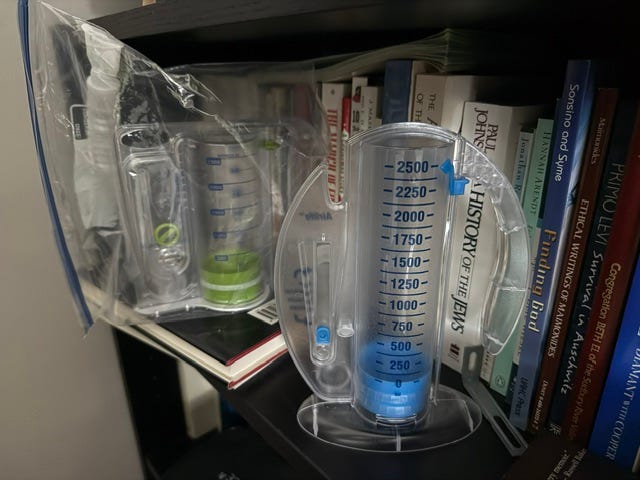
The respiratory therapist practically ordered me into the room recliner (sitting upright is better than slumping in bed) and told me to shoot for very short walks interspersed with the spirometer. Drew, the day nurse, led me down a hall and back (200 yards?), with a nice break to catch my breath. I started the day on 6 liters of O2 — as I mentioned, rough night — which was cut to 4, then 3.5, then 3. PulseOx has held steady.
Credit also to pulmonologist Dr. Y— for laying out details clearly and bluntly. We also talked baseball. She’s from Pittsburgh and a Pirates fan, so she and S— bonded over nice stadiums and shared futility.
My lungs have taken a beating, but they’re suffering from acute issues, so they should improve. Dr. Y— believes the steroids are already helping. She ordered an x-ray for this afternoon, which I had at 4:30. Curious to see the results.
Other than that, recovering. Will finish Part 2 of “Get Back” tonight and may start on Part 3. Technology is amazing.
-
Update, 11/29 p.m.:
A steady day. The docs say I’m making progress and I feel like I am, too — though I’d like to go straight from the shortness-of-breath stage to the running-around-the-block stage and not have to deal with those slow, messy stages in between, like using oxygen, avoiding stairs, walking carefully, taking frequent breaks, etc.
In my mind I’m still 26, or 55, or even the two-at-a-time stair climber 56-year-old I was last month. Life is a teacher, and sometimes bluntly so.
Still, the news is pretty good. I entertained a phalanx of doctors, led by another pulmonologist from the nearby St. Luke’s practice, as they (mainly he) peppered me with questions. My x-ray showed definite improvement, I would be switched to prednisone pills tomorrow, and air was flowing more freely. I’ll be checking in with his office a few days after my discharge, still undetermined, though possibly Wednesday or Thursday.
My mind was cast back to when I was in college and I had a strange skin ailment on my buttocks that went through a couple diagnoses before treatment was decided. In the meantime, since I was at the Emory Clinic under the care of the dermatology department head (the wonderful Raymond Jones), I was occasionally invited to moon medical students.
And you wonder why I think life is absurd?
These kids just got to watch the pulmonologist put a stethoscope to my back. C’mon, students, ask me some questions or I’ll show you my ass!
(Emory connection: My overnight nurse, G—, graduated from the nursing school, class of ‘19. Her experience of Atlanta was traffic and rude drivers. Sadly, she’s not wrong.)
Not much else. Want to keep getting better and working hard to do it. Though if I get a chance to moon medical students, I’ll take it.
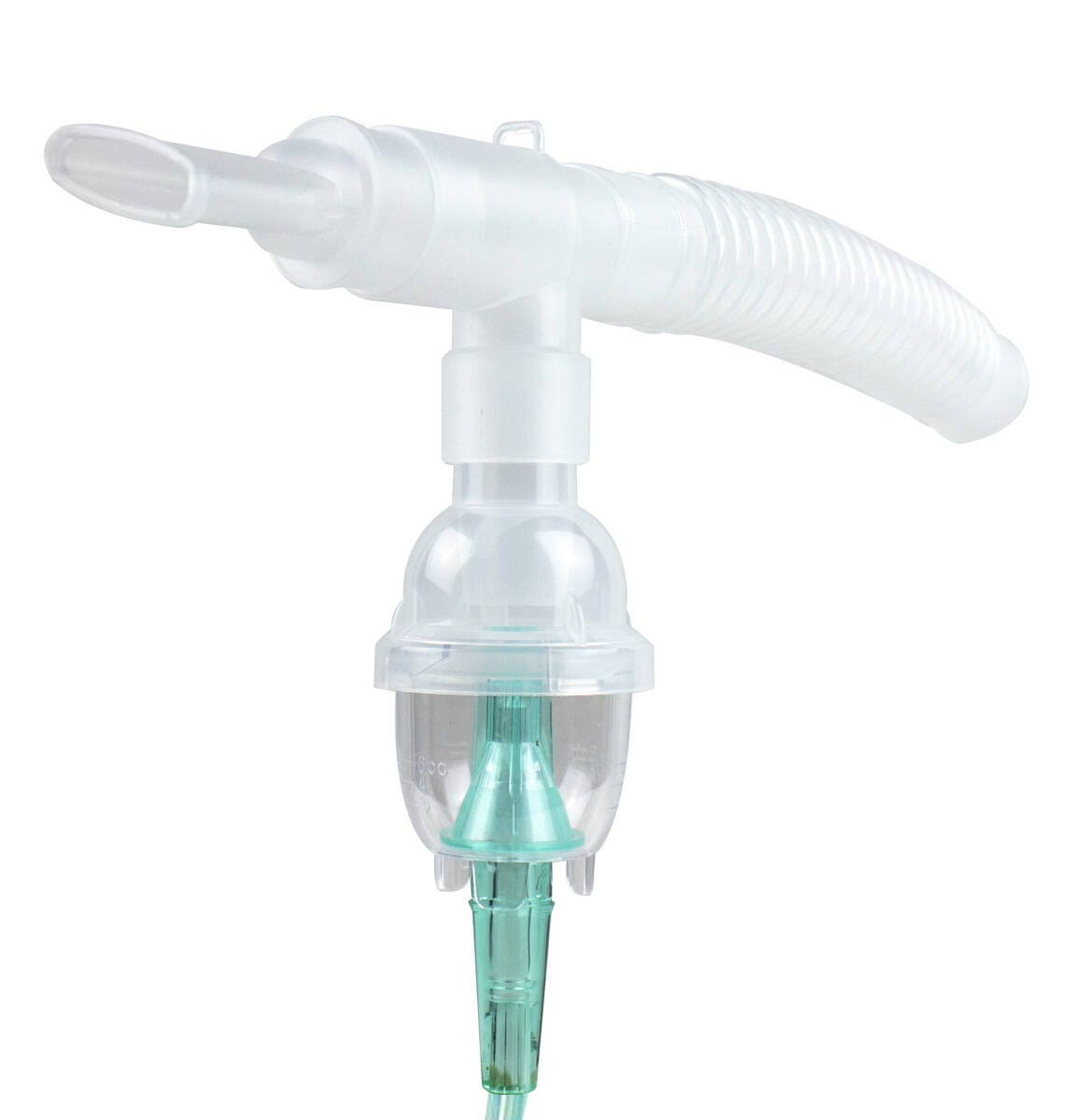
(Photo: My twice-a-day friend, the nebulizer.)
Several years ago, I interviewed Norman Lear about his book, “Even This I Get to Experience.”
It’s a great title. Lear was in his 90s when he wrote the memoir and died at 101. He lived long enough to experience the Roaring ‘20s and the Great Depression, the peak of radio entertainment, writing for Dean Martin and Jerry Lewis, creating some groundbreaking television shows, defending liberal causes, and becoming a role model for a new generation of TV producers.
I haven’t had Lear’s life — far from it — but if you live long enough, you will experience something new, even if you think you’re too old for that shit.
In my case, it was riding in an ambulance on Thanksgiving Day after being carried downstairs in a wheelchair.
As noted in the entries above, my recovery from the earlier hospital visit was poor. I’d been given a fingertip pulse-ox indicator and the numbers weren’t where they should be. At one point, I called my old home-care nurse and asked her what she would do with numbers that strained to get into the 90s. She said she’d return to the hospital. I put her advice in my back pocket, but I really didn’t want to go back to the hospital. After all, I’d just left.
But even with an oxygen concentrator running constantly and a cannula in my nose, I knew something wasn’t right. When I awoke in the middle of the night and saw that my O2 was struggling, we called 911.
I felt guilty. Don’t police officers and paramedics have actual sick people and/or criminals to deal with? I thought they’d arrive and think, what a GOMER.
Instead, they were pleasant and professional. S— and my bedroom is upstairs in our 1907 Pennsylvania twin, so they told me that they’d have to carry me downstairs in a chair and to not give into the urge to move or I’d risk being dropped. The stairs are narrow, and I was worried that I’d be both oxygen-deprived and injured. But I closed my eyes and suddenly we were outside on a damp, cold and still-dark Thanksgiving morning, ambulance at the ready. The paramedics hooked me up to monitors and we were off to St. Luke’s, S— gingerly following in her Hyundai.
Conclusion: If you’re debating about calling 911, you probably need to call 911. (Please act responsibly.)
Reading these entries now, I realize how little I’d recalled beyond keeping my phone charged so I could watch “The Beatles: Get Back” on Disney, to which I’d subscribed purely to see the documentary. I didn’t remember the bronchoscopy or how challenging it was (literally, since I was out cold for the procedure). I didn’t remember the shivering episode, which had me panicked in my inability to control my limbs. I didn’t remember the respiratory therapist and her nebulizer. (I do remember the spirometer exercises; I still have at least two of the devices in the house.)
I don’t remember the medical students, or the slow walks down the hospital hallway, or the nurse who went to my alma mater.
I do remember coming home to the oxygen concentrator and making sure the tubing could extend from my bedroom to the bathroom in one direction, and down the stairs to the living room in another. (I kept a portable oxygen canister in the living room, too.) And I remember thinking, Now what?
Life can be like that.
In general, I have a pretty good memory. I’m a lifelong trivia buff. I can tell you the phone number of my childhood house. I don’t need to look up the recipe for Nestle Toll House Chocolate Chip Cookies.
But I understand why the quotidian and not-so-quotidian events of this hospital stay would have vanished permanently had I not written them down on social media. There was too much emotion involved — negative emotion, the kind of feelings associated with trauma or worries about grinding failure and permanent disability. My memory wants to remember the positive stuff.
So, getting hoisted down the stairs? Novel and exciting. Spending tedious hours in a hospital room practicing breathing, or terrifying minutes with uncontrollable shakes? Zero stars.
Would not recommend the experience.
Todd, Thank you for sharing your story. Particularly your emotions and the gratitude you have for those who helped you and gave you care. From nurses and doctors to police and fire folks.
Instances of human kindness even small , positive interactions of concern and compassion carry surprising weight when one is not well. In the grips of the medical bureaucracy.