
The Good Doctor
The necessity of hope when you're trying to escape the slough of despond; My cancer memoir, "Acknowledgments," continued

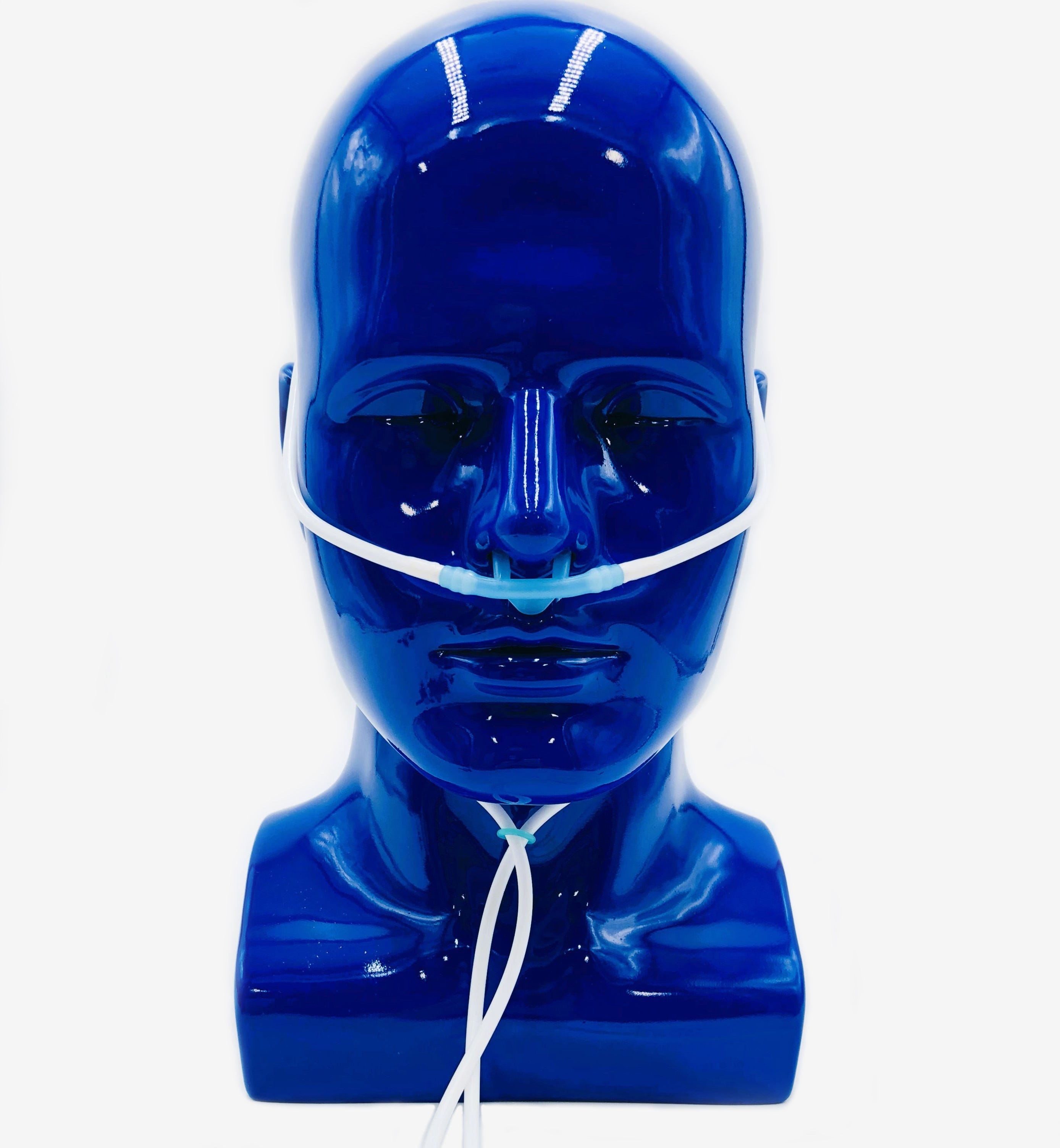
For new readers: More than a year ago, at the beginning of 2025, I told myself that I would finally write my cancer memoir. I had saved my posts and notes from the 15 months I went through treatment, and I was going to put it together into a book, even if only to prove that I could.
As a way of pushing myself, I’m posting chapters on Substack. The goal is to have a complete memoir, eventually. Each chapter will begin with one or more posts I made during treatment, followed by commentary. You can find earlier chapters at blockheadchronicles.substack.com, though you may have to hunt a bit, because I’ve gotten lazy about continuing the cancer story, instead writing about music, movies, baseball, and politics. You know: things that matter.
(Also: Cats.)
As with any project of this type, the writing is loosely edited and baggier than I’d like (and I’m someone who writes lots of baggy parenthetical interruptions, like this one). In fact, consider it a … second draft. Or a 1-1/2th draft. Something to keep in mind if you’re expecting a polished reading experience. This is more like a crusty lump of coal.
IV. Breathing
Update, 12/8 a.m. (Facebook, December 8, 2021):
Tom Petty is right: The waiting IS the hardest part.
A week out of the hospital, and all I can do is assume I’m getting better. My oxygen — and I’m wearing supplemental O2 24/7 — still takes a dive when I exert myself, though it comes back up pretty quickly. The lung fluid I drain, which was almost gone two weeks ago (before the hospital stays), was higher yesterday than it was last week, so it’ll be a few more weeks before I even qualify to get the drain removed. (Gawd, I am SO looking forward to that.) I’m sleeping OK but there are all these *unknowns* that make me nervous.
So all I can do is try to focus on other things. S— is carrying all the weight around here. It’s even become a personal joke: The G9 LED light bulbs in the bathroom have decided to flicker, so they’ll have to be changed because they’re driving us nuts. First I had to order more from Amazon — I hope these are better quality — and then we’ll have to put them in.
But how many mes does it take to change a light bulb? Zero, because you shouldn’t fool with electricity while wearing oxygen. Even popping in a light bulb.
I know, I know: Grant me the serenity to accept the things I cannot change, courage to change the things I can, and wisdom to know the difference. Thanks, Mr. Niebuhr.
So it’s status quo. We had a new nurse yesterday. He was very impressed with S—’s and my ability to do the drain. We’ve had a lot of practice! He warned us about infection1, which is yet another thing I don’t want to think about. Between Covid outside, cat hair within, and the piles of magazines on tables, I feel like even a remotely sterile environment is a challenge. We do the best we can.
Our old nurse, Kim, is coming by today to wrap up. We love her but my most recent hospital stay meant that we had to switch agencies (change of focus, insurance, etc.). I owe her a lot, not least in encouraging me to call the doctor when my vitals got a bit off before Thanksgiving. I probably would have let it go, and then what?
One thing I appreciate: The weather forecast. If it holds, we probably won’t have any noticeable snow for the rest of this year. I’m sure that disappoints some of my skiing friends, but after the multiple dumps we got LAST winter, I don’t want to see or deal with any of the white stuff until 2023.
Thanks for listening. You can probably tell I’m not in the most confident state of mind. Kind words and jokes are always welcome. (Just not light bulb jokes. I’ll sit here in the dark. Ba-dum!)
-
Update, 12/11 a.m.:
Not much new to report on the physical front. There was some scheduling confusion (not mine) for the radiation oncologist, so that appointment was changed from yesterday to next Thursday.
Meanwhile, I did meet with my primary care physician, who said I’m doing everything right and that I was looking better than I did when I last saw her in April, when I was wheezing and just before I got the cancer diagnosis. I was glad to hear that.
The person I really have questions for is the pulmonologist, which will be first thing Monday morning. Though I’m doing my best to build up my stamina, it’s disheartening to do something as simple as putting on clothes and note that my oxygen has dropped a few points. Part of that is probably due to the fact that I’m not increasing the pressure during even that simple exertion — I stay hooked up to the concentrator, which is in a different room and is delivering 4 liters through a 50-foot tube, so I figure I’m probably getting 2.5-3 at the nose end of the line — but still. I want to improve. I hope I am.
However, small victories. Yesterday I made my way down hallways and across parking lots with an O2 cylinder in tow and felt OK. I’m extremely wary of even being light-headed, as you can imagine, but it was fine. I’ll continue that ... today I’ll do a couple four-minute walks around my house. And the spirometer has become a regular companion.
--
On a much more important note, yesterday I received a couple unexpected gifts from some people who I will keep anonymous.
I will never not be touched by your kindness and prayers. I wish everybody could feel this cared for. It’s the kind of world we should seek.
I’ll put in another plug for vaccinations. Yesterday I was at the infusion center, talking with some of my favorite nurses (and I have a LOT of favorite nurses), and one of them was putting on what looked like a space helmet. I asked Amanda, who was drawing my blood, what that was about.
“Covid patients,” she said.
A couple of the infusion nurses are designated to work the Covid ward, and this is the uniform. You have to put on something approaching a hazmat suit to do the job.2
It’s heartbreaking all the way around. I know it’s become bleakly fashionable to shrug and say, this is what happens when you reject science and the concept of public health, but as furious and sad as the anti-vaccine/anti-science attitude makes me, nobody deserves to suffer from Covid’s manifestations. And nobody should have to look like they’re entering 1986 Chernobyl to go to work.
St. Luke’s and the Lehigh Valley had been fortunate during Delta, but the last week or two has changed all that. Amanda told me the ER is now full. Moreover, something like 80%-plus of the patients aren’t vaccinated. It’s all so avoidable — for everybody.
So please. If you’re not vaccinated, get your shots. If you haven’t gotten your booster (and you qualify), take care of it. It’s something you can do for everybody. Don’t make infusion nurses put on astronaut helmets. They’re not going to Mars — they’re simply trying to help you get better.
Also, if you can spare a few bucks, donate to nursing organizations.
-
Update, 12/13 p.m.:
Met with a pulmonologist, Dr. T— M—, this morning. I liked him a lot — he was plainspoken, thorough, and answered all my anxious questions.
The upshot is I’m doing the right stuff. I’m staying on oxygen but using my spirometer (which I have to do more of) and taking short walks to build up my stamina. He’d like to see more of the cultures that were taken in the brochoscopy to confirm a diagnosis of eosinophilic pneumonia (apparently, though my bloodwork was high in those white blood cells, the biopsy didn’t indicate it inside my lungs), but that’s something he’ll pursue.
My lungs sound clear. I’ll try to keep them that way. Sorry, no smoking in my house. Also, no coal mining or plutonium refining.
He made no promises about getting off oxygen by the time I’m done with the steroid regimen first week in January, but here’s hoping. I’m scheduled to see him again just before I’m done so he can gauge my progress. I’ll likely have at least an x-ray, if not more blood work.
It’s going to be slow, he says. It’s not like I’ll wake up in a week and be able to take the stairs two at a time again. That’s OK. Just a little bit more each day.
S— continues to shoulder the load around here. Thank you for keeping me in your thoughts, but definitely send her support as well.
In an early episode of the 1990s TV show “Northern Exposure,” Dr. Joel Fleischman, the New York doctor who has to practice medicine for four years in Alaska as part of his medical school tuition deal, is talking with one of the eccentric characters of Cicely, the small town where he’s been placed. He’s a little upset that he actually has to be a general practitioner, complete with empathy and a friendly bedside manner.
This wasn’t what he’d planned, he adds. He doesn’t like people. He was going to be a pathologist.
I saw a lot of doctors during my 15 months of cancer treatment, and I’m happy to say I met very few Joel Fleischmans. (Though he turned out OK, at least until Rob Morrow left the show over a contract dispute.) Most seemed to take a genuine interest in me and my case, even when they were doing rounds. A couple, especially my oncologist and Dr. M—, the pulmonologist, gave me hope for humanity.
Seriously.
I was reminded of this when someone I know recently had to visit a neurologist over some memory lapses. These days, we’re all acutely aware of the falterings that come with age, and — in the backs of our minds — terrified of what they could mean. An ischemic stroke? Early-onset Alzheimer’s? A brain tumor?
This neurologist, though, was no help. My acquaintance was treated briskly, with some rote questions, given an unpleasant diagnosis and a prescription, and told to check in again in six months. It was as if they were a checklist, not a person.
My acquaintance was poleaxed. It wasn’t until they saw another neurologist three weeks later that more questions were raised. Within that doubt came hope — hope that the doctor, with his courteous manner and calming answers, encouraged.
“Hope” is the thing with feathers -
That perches in the soul -
And sings the tune without the words -
And never stops - at all -
I was never much on Emily Dickinson growing up. She had a gift for imagery but her own image, cast by potted histories as a lonely spinster in a bedroom composing somber quatrains, left me distant, not sympathetic. Admittedly, this is cold of me; in retrospect, Dickinson was probably feistier and more rebellious than I was told in high school. You can hear it in her verse: In one poem, she describes a woman’s life tersely as “Born—Bridalled—Shrouded.”
Amid her doominess is that famous metaphor of hope as a feathered beast, singing from the soul. Never giving up. Waiting to fly.
The winter of 2021-22 was a low point in my treatment. I was joined to an oxygen concentrator, having to order O2 canisters from a local supplier. I was still draining my chylothorax and wondering if I was going to have to live with a hole in my lymphatic duct for the rest of my life — a kind of stoma. Cold weather was descending, as was the darkness of the season. It was a bleak time.
So having doctors like Dr. M— was a balm to my soul. They assured me there would be a better future. And if there wasn’t? They would be in my corner, helping attach wings to my chest.
Wait until I have surgery on the lymphatic duct. But I’m getting way ahead of the story.
How quickly we forget.
I'm glad your experiences with specialists went well. My father had an excellent oncologist...but her bedside manner left a bit to be desired. We met with her after his surgery before he woke up, and she said (if not verbatim, pretty close):
"We did all we could, but we couldn't get it all, since it is the brain. He'll live a couple of years more if he's lucky."
Follow up meetings with her (I would accompany my father to her office when he did treatments at U Penn) were similar in tone.