
A Bright Spot in the Sky
Thank you to the Artemis II mission for reminding us of the importance of space—and of Earth

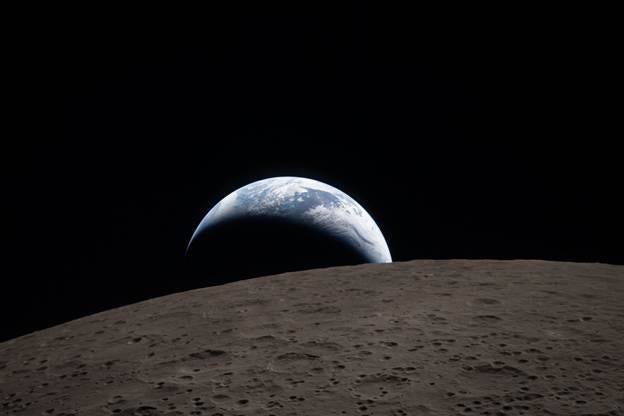
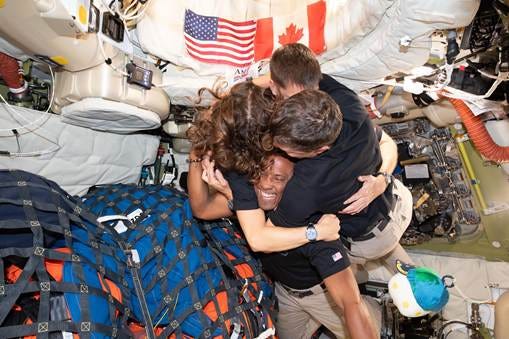
“On Friday at 8:07 p.m. Eastern time, Mr. Hansen and the crew — Reid Wiseman, Victor Glover and Christina Koch of NASA — splashed down safely off San Diego. As they barreled toward the Pacific Ocean, the final three red-and-white parachutes gently delivered the vessel, plopping it onto the calm waters. My eyes filled with tears.” – Vjosa Isai, The New York Times
The Artemis mission rejuvenated my sense of wonder and awe.
I was 4 when Apollo 11 landed on the Moon. I don’t remember the landing itself, but I remember the feeling of the space program—the excitement of each mission, the calm direction of Mission Control, the overwhelming concept that we were sending people into space and landing them on the moon. Nobody summed it up better than the Onion:

Though other events on Earth were going to hell, there were great things happening in space exploration. What other event could make Walter Cronkite tear up in joy?
(And don’t you dare question the moon landing, or I’ll sic Buzz Aldrin on you.)
Like many other children growing up in the ‘60s and ‘70s, I wanted to be an astronaut one day. My father saved newspapers and magazines about Apollo 11; I read them all. I followed the succeeding missions through the decades, from Skylab to the shuttles.
I didn’t think I had what it took to be Aldrin or Neil Armstrong, but I figured that even civilians like me would get to visit outer space by the end of the century. After all, in my favorite movie, “2001: A Space Odyssey,” a trip “up” or “down” seemed as mundane as flying overseas. And yet it’s one of the rare films that treats space with the otherworldly reverence it deserves.
But 25 years after the events of “2001,” regular flights to space are still a thing of the future—if they ever happen at all—and in recent years, the attention has turned to the industry of Elon Musk and Jeff Bezos, who seem more determined to turn the Moon into a helium mining colony than a place for scientific endeavor. I know that rockets are expensive and space exploration is dangerous, but is relocating Earth’s dirty quarries to the lunar surface the best we can do?
How Victorian.
Meanwhile, NASA was moving ahead on its own Moon plans. The space agency had been marginalized by the Trump administration, which cared more about Space Force (whatever happened to Space Force?), but had quietly been assembling the pieces to resume lunar exploration.
Still, I’d figured it wouldn’t happen for years, as NASA missions always seemed to miss deadlines. I was actually caught by surprise when Artemis II took off on April 1.
And then, to my continued surprise, the old feelings returned.
Now we weren’t watching on grainy, rabbit-eared cathode-ray tube televisions, but on NASA.gov and YouTube. Now you could follow Artemis’ progress on a website and an app. Now you could see the view from its cameras in real time.
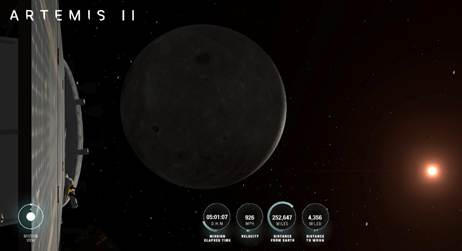
I found myself checking in once, twice, three times a day. I made the image of the Earth beyond the Moon’s far side my lock-screen wallpaper. I laughed at Dave Barry’s column about the crew’s difficulty with Windows and its toilet, and thrilled to the ease that these astronauts—always with the relaxed problem-solving skills of engineers—handled their problems.
And when they landed Friday evening Eastern time, I got choked up with joy.
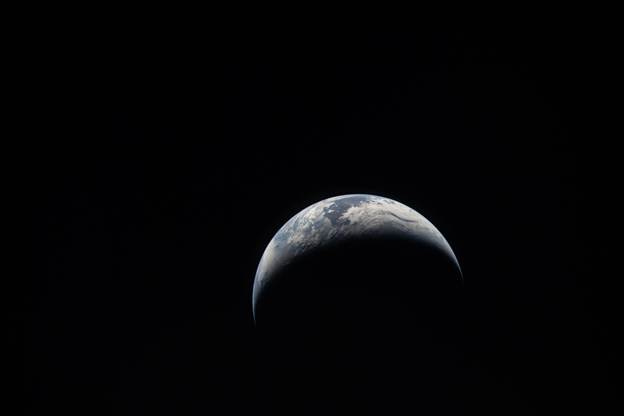
Many of the Apollo astronauts commented about how small and insignificant space made them feel. If only more humans could see our blue marble from space, they have said, they’d realize just how important it is to preserve it, not destroy it. (Consultant and “space philosopher” Frank White—no relation to Ed White, the first man to walk in space—has called it the “Overview Effect.”)
Artemis’ Christina Koch was struck by the same emotion.
“The thing that changed for me looking back at Earth was that I found myself noticing not only the beauty of the Earth, but how much blackness there was around it, and how it just made it even more special,” Koch said.
If only. As I write this on Sunday afternoon, talks between the U.S. and Iran have broken down, and the president is threatening to blockade the Strait of Hormuz. Meanwhile, bombs keep on falling in Lebanon, in Ukraine, and in countless places that I can’t be bothered to check. As Apollo 14’s Edgar Mitchell said, “You want to grab a politician by the scruff of the neck and drag him a quarter of a million miles out and say, ‘Look at that, you son of a bitch.’ ”
(I’d like to send up a few flat-earthers with the politicians. They could use a more rounded perspective.)
But I’m not going to let some petty humans get me down. The Artemis mission left me on a high; better to stay there, while working to make this stupid planet a place future generations can enjoy.
I’m 61 and likely will never be climbing aboard that Pan Am shuttle to a space station, where a nice warm bed awaits me in the Howard Johnson’s. But I can keep the words of then 90-year-old William Shatner in mind when he took a ride on Jeff Bezos’ Blue Origin.
“I had thought that going into space would be the ultimate catharsis of that connection I had been looking for between all living things—that being up there would be the next beautiful step to understanding the harmony of the universe. … I discovered that the beauty isn’t out there, it’s down here, with all of us. Leaving that behind made my connection to our tiny planet even more profound. It was among the strongest feelings of grief I have ever encountered.”
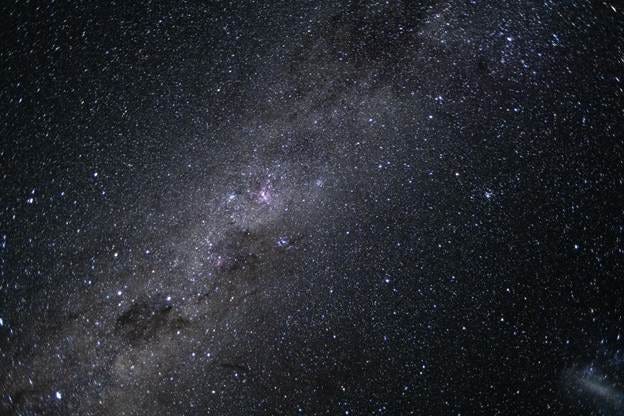
Thank you, Artemis, for the awe and wonder. And thank you, especially, for the reminder that Earth is our home—now and for as much of a future as we can create.
To reverse Casey Kasem, of all people, there’s nothing wrong with reaching for the stars, but we need to keep our feet on the ground, too.
Hank Green has a great 30-minute video explaining some of the most important Artemis II photos: https://youtu.be/oaXRREHVkHo?si=4TVV2rhBxeKLpBvN
Wonder and Joy
Todd, thank you for reminding us of wonder and joy. “ How special the earth is.” Of the outer space point of view that should bring better behavior from “ petty humans.”
To lack wonder about much of anything is along with the current base level emotions doing harm- meanness, greed and revenge-our new human sadness.
Your words are reminders to have joy and wonder.