
31 Lengths
The day Secretariat left the rest of the world behind

The following is a revised version of a blog post I wrote on August 16, 2016.
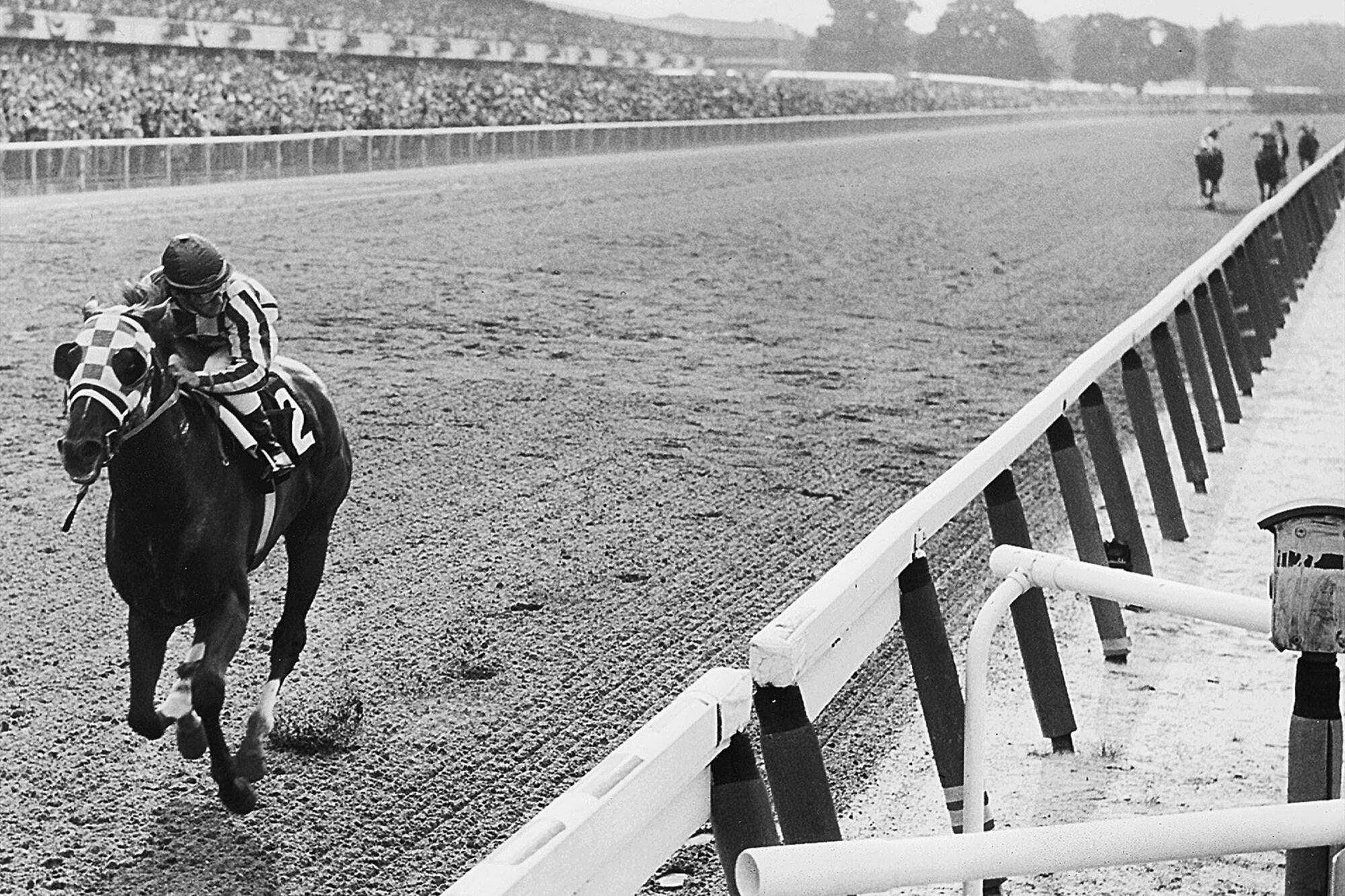
Recently I was doing some research on the events of 1973, which gave me the opportunity to rewatch one of my favorite sports videos: Secretariat running away with the 1973 Belmont Stakes.
That's Chic Anderson's call of the Belmont, which Secretariat won by an inconceivable 31 lengths. I dare you to watch that video without getting choked up; it's one of the great sports performances of modern times, and I won't listen if you say, "Well, it's just a horse."
Just a horse? Was Albert Einstein just a scientist? Was Ken Jennings just a “Jeopardy!” contestant?
I have a book and CD that compiles some of the greatest announcing calls in sports history: “Havlicek stole the ball,” “I don’t believe what I just saw,” and others in that vein.
But none of them get me like Anderson’s call of the Belmont and watching the magnificent performance of Secretariat, who is, indeed, all alone in terms of his achievements.
You have to know the context: In 1973, there had been no Triple Crown winner in a quarter-century. Along comes Secretariat, who’s not just winning races, but doing so overwhelmingly. He set a record in the Kentucky Derby and then followed it with another record in the Preakness. Both records still stand.
Could he win the Belmont? He absolutely could—with another record that still stands. I’m trying to think of equivalents in other sports. Babe Ruth? Michael Jordan? “Big Red” was on that level—and, in horse racing, perhaps unmatched. Certainly, few horses have captured the kind of attention and acclaim he did.
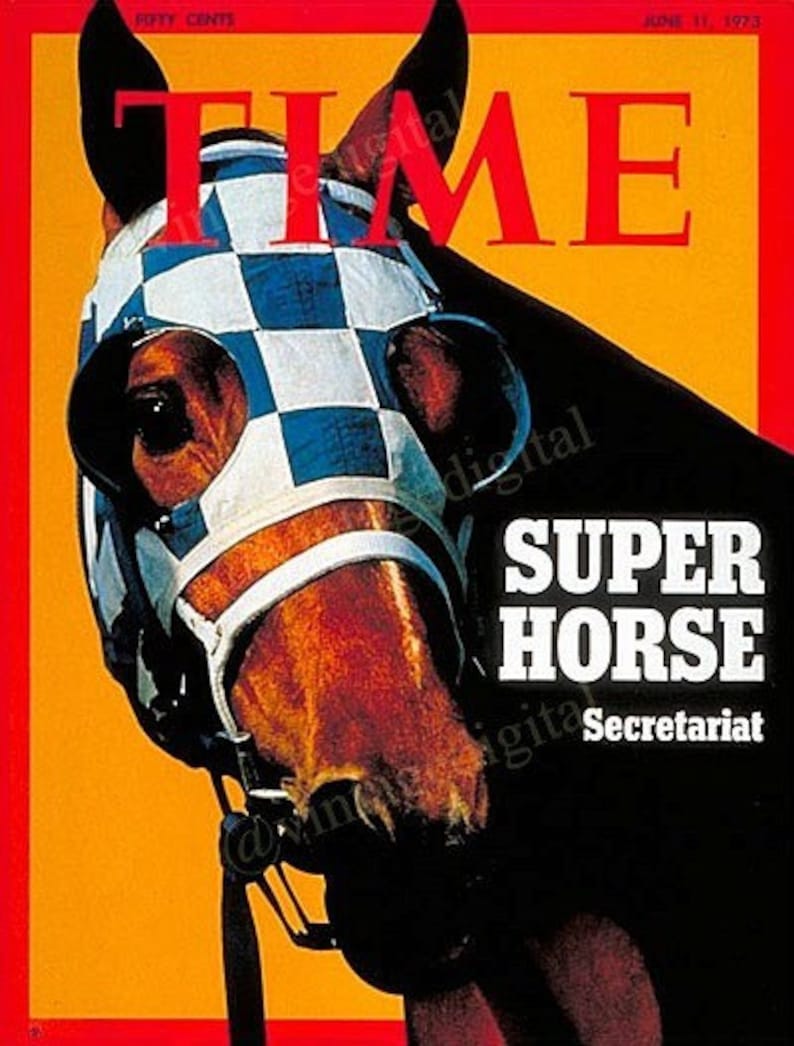
One of the sportswriters following Secretariat was William Nack, then of Newsday, later at Sports Illustrated. A year after Secretariat died in 1989, Nack published a beautiful story about the champion horse, “Pure Heart.”
This quote, from horse farm owner Seth Hancock, sums up what made Secretariat special:
“Ten thousand people come to this farm every year, and all they want to see is Secretariat. They don’t give a hoot about the other studs. You want to know who Secretariat is in human terms? Just imagine the greatest athlete in the world. The greatest. Now make him six-foot-three, the perfect height. Make him real intelligent and kind. And on top of that, make him the best-lookin’ guy ever to come down the pike. He was all those things as a horse. He isn’t even a horse anymore. He’s a legend. So how do you think I feel?”
In the decades since Secretariat’s victories, the sports landscape has changed signficantly. In the middle of the 20th century, the big attractions were major league baseball, boxing, and horse racing. Perhaps college football, too. But the NFL and NBA were minor league sports, and forget about the NHL or the World Cup.
Horse racing was still a powerful draw when Secretariat dominated in the 1970s, as was boxing (it was the era of Muhammad Ali), but today it’s an afterthought. Tracks all over the United States have closed, more than 20 of them in just the last decade alone. Attendance is down 30% since 2000. You don’t need a track, or even OTB, to bet anymore; just pull out your phone and wager, on pretty much anything.
For that matter, major sports journalism is in decline, too. Nack’s story brings back memories of when Sports Illustrated was at its peak, filled with colorful features and talented writers like Nack (who passed away in 2018), Frank Deford, Gary Smith, and Steve Wulf. Now it’s a husk of its former self, though—to its credit—the current owners have maintained the SI Vault.
Fortunately, we’ll always have Secretariat. I like to think that Paul Simon was inspired by Anderson’s call of the horse as a “tremendous machine” when he wrote the song “One-Trick Pony”:
He makes it look so easy
He looks so clean
He moves like God’s
Immaculate machine
But Secretariat transcends one trick. He’s was the whole show.